 DreamCrane
One person, shipped product.
DreamCrane turns a spoken dream into a painting. It is bootstrapped, built by one person, and out on both stores - Google Play since 19 August 2026, the App Store since 1 September 2026. Generation, moderation, subscriptions, the video queue and an internal review console all run in production. It is the studio's second shipped app this summer.
We are applying to programs for inference and cloud credits. This page is the short version of everything such an application asks for; anything missing, ask - we answer the same day.


Out now on the App Store and Google Play.
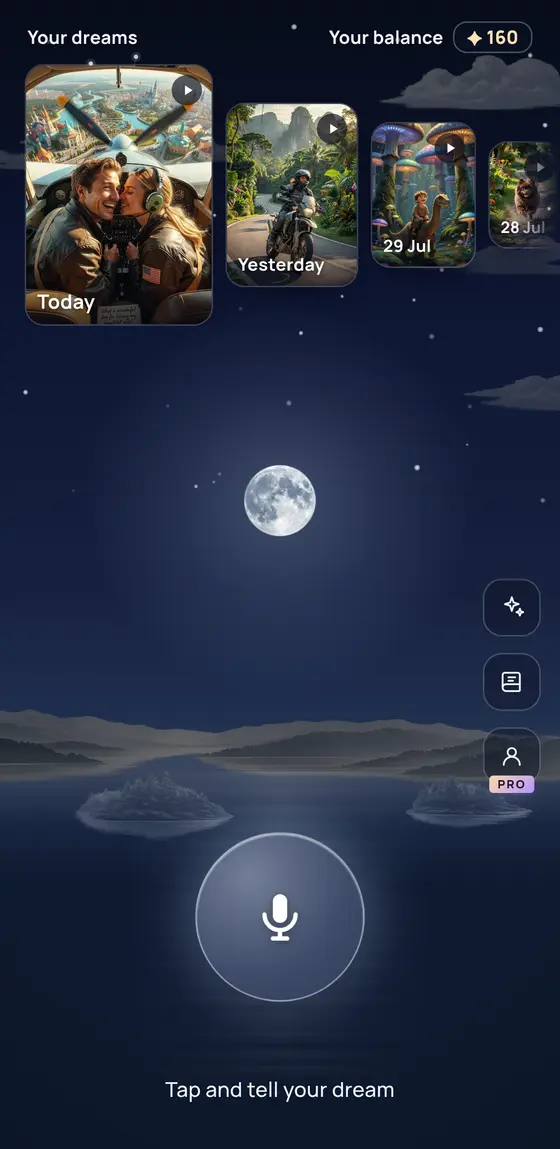
The product in a minute
You wake up, press one button and say what you saw - half asleep is fine. The recording is transcribed, turned into a painting prompt and painted in about ten seconds. The picture lands in a private journal next to your own words, and can be interpreted or animated into a short clip.
The whole loop takes under three minutes and happens before you are properly awake, which is the only window in which a dream still exists.
- One painted dream a day on every plan - a rhythm, not a paywall.
- Speech recognition in 60+ languages, detected automatically.
- Private by default; nothing is public without per-dream consent and review.
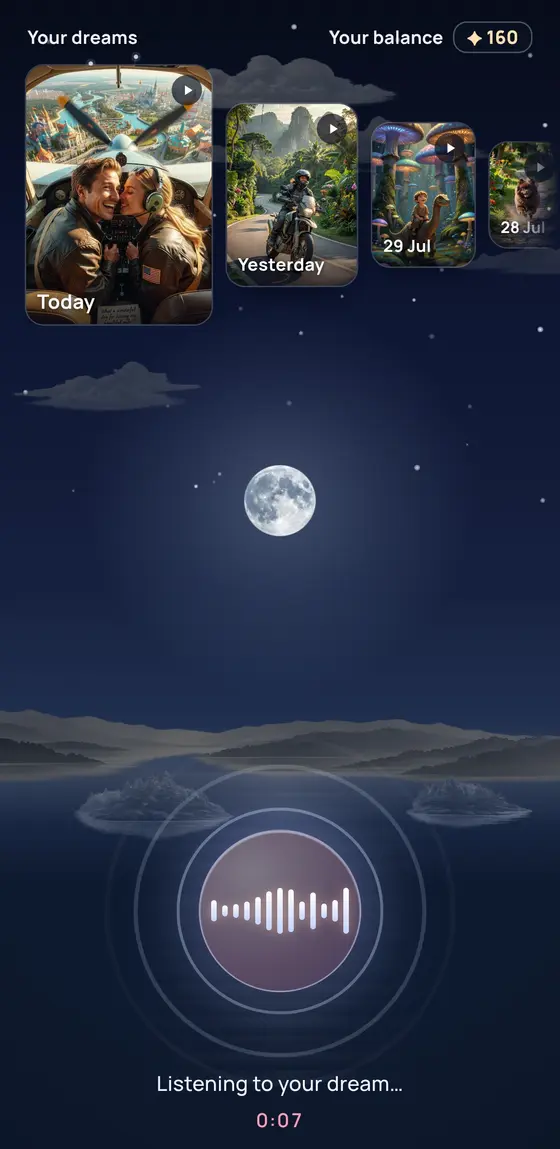

One dream, all three steps. The painting arrives in about ten seconds; animating it costs twenty credits and comes back a couple of minutes later as a notification.
Fact sheet
- What it is
- A voice-first AI dream journal for iOS and Android: speak a dream, get a painting, keep it, optionally have it interpreted or animated.
- Stage
- Live on both stores, after closed testing on each: Google Play since 19 August 2026, the App Store since 1 September 2026. Same codebase, same release train on both.
- Company
- ALEKSEI SHELEP, IE - an individual entrepreneur registered in Georgia in August 2022, doing business as SabaiDeep.
- Founded
- The entity in August 2022; the SabaiDeep studio in June 2026.
- Track record
- Two apps shipped in three months. Alif Alphabet - released in June 2026, on Google Play and the App Store. DreamCrane - first commit on 30 June, on Google Play on 19 August - seven weeks, one person - and on the App Store on 1 September.
- Team
- One person: product, design, mobile, backend, infrastructure.
- Funding
- Bootstrapped. No outside investment, no debt.
- Business model
- Subscription - $9.99 a month or $79.99 a year - plus a one-time credit pack for video. No ads, no trackers, no data resale.
- Languages
- Interface in seven languages - English, Russian, Spanish, German, Japanese, Korean, Thai; speech recognition in 60+.
- Contact
- support (at) sabaideep.com - answered the same day.
How it is built
The interesting part is not the image model - anyone can call one. It is everything that has to happen around it so that a half-asleep person gets a picture and not an error, and so that a paid API call is never wasted.
- Voice in. Native recording on device, uploaded as binary multipart. Daily quota and a byte guard sit in front of it - speech-to-text is billed per second.
- Transcription. Soniox async, 60+ languages with automatic detection, so nobody picks a language at six in the morning.
- Prompt building. An LLM turns raw speech into an English painting prompt: it keeps the scene, translates, and rephrases sensitive material rather than dropping it. Raw speech is never sent to the image model - it used to be, and the provider's content checker burned paid attempts on ordinary dreams.
- Two moderation passes. The transcript is screened before anything is charged, and the rewritten prompt is screened again before the paid call. Categories that can never be depicted are blocked outright; the rest is softened, not refused.
- Generation. Image model through fal.ai, 9:16 WebP, about ten seconds, streamed to the app over SSE with progress. Credits are debited up front and refunded on infrastructure failures - but not on content rejections, which cost us real money.
- Storage. Every image is copied out of the provider CDN into our own object storage behind a custom domain, so a dream does not disappear when a vendor rotates a URL.
- Video. Image-to-video runs through a Postgres-backed job queue with its own credit accounting, retries and refunds. Clips are transcoded before they reach a phone.
- Moderation console. A separate internal Android app: review queue for shared dreams and reports, runtime settings and kill switches, metrics, Telegram alerts with inline actions. Nothing about safety depends on someone opening a laptop.
- Delivery. One codebase for both platforms, with self-hosted over-the-air JS updates keyed per native version - a fix ships in minutes without a store review.
What credits would go to
Inference is our largest variable cost by a wide margin, and it scales linearly with active users - one painted dream per person per day, by design. Credits translate directly into runway.
- Image inference
- One generation per user per day, two for subscribers who get a choice of variants. This is the bulk of the spend.
- Video inference
- Image-to-video on demand, a few seconds per clip. Rarer than images, an order of magnitude more expensive per call.
- Speech-to-text
- Up to about thirty seconds of audio per dream.
- Language models
- Prompt building on every dream, plus interpretation and symbol extraction for subscribers. Small models, high call volume.
- Storage and delivery
- The dream archive only grows - people come back for dreams from a year ago. Images are a few dozen kilobytes each, clips a couple of megabytes.
- Compute and database
- Today a single VPS with Postgres and a job queue. Managed database and object storage is the first thing we would move to.
Traction
The app has been public for weeks, not months - and on iOS for days - so the honest version is: here is what we measure and how to get the current numbers.
Retention, funnel, per-dream unit economics and infrastructure spend are tracked in our own console and shared on request or inside your application form. We do not publish cost figures here: the page is read by users as well, and a unit cost next to a subscription price is a conversation we would rather have with you directly.
Trust, safety and compliance
Dreams are intimate material, and the app shows user content publicly. Both were designed for before launch, not bolted on after a complaint.
- Anonymous-first accounts - no sign-up wall, nothing collected to start.
- Every dream private by default; public sharing is per-dream and opt-in.
- Human review before anything appears publicly, plus one-tap reporting that pulls a dream back automatically.
- Prompts screened by an automated moderation service before any generation.
- Account deletion from inside the app removes dreams and their media in one operation.
- AI-generated content is labelled as such in the app and in store metadata.
- Interpretations are presented as reflection and entertainment, never as medical or psychological advice.
- No ads, no third-party trackers, no data resale.
Full texts: Privacy Policy, Terms of Use, Delete my data.
What we are looking for
The product is out and the engineering is done. What is missing is reach and runway - and the two things a bootstrapped one-person studio cannot simply buy: distribution and time.
- Credits
- Inference above all - image and video generation is our largest variable cost and it grows with every active user. After that, cloud hosting, managed Postgres and object storage. Credits convert into runway one to one.
- Distribution
- Store featuring, editorial placement, press, and introductions to people who move consumer apps through short video. A dream is native 9:16 content - the format is already right, the reach is not.
- Investment
- Open to angel and pre-seed conversations. There is no round announced and no deadline - capital would go to runway and paid acquisition, not to headcount: the product does not need more hands to work, it needs to be found.
- Expertise
- Honest opinions on user acquisition and store optimisation are worth more to us right now than most cheques. Mentorship in that area is a real reason to pick one program over another.
- What we are not looking for
- Rebuilding the product for a platform, exclusivity, or anything that puts ads or data resale into an app people tell their dreams to. That part is not negotiable.
If your program needs a form filled, a deck, a call or a build to test - write, and it will be there the same day.
What is next
- Making the first dream land. The largest loss we measure is not months in - it is the first morning, between a recording and a finished painting. That step is instrumented end to end, and the next releases go there: fewer ways to fall out, an honest way back when something does fail.
- Paintings closer to the dream. When a dream holds both a place and an action, the prompt builder keeps the action but rarely makes it the subject of the scene - measured with a probe rather than guessed at. Where the motif lands inside the prompt is the largest quality gain available without changing the image model.
- More languages, deeper markets. The interface speaks seven languages, speech recognition 60+; the gap between those two numbers is reach we already pay for. Next is the rest of each market - store copy, screenshots and search terms per language, not translated buttons alone.
- Distribution through short video. A dream is born as a vertical 9:16 image and can be animated in one tap, which is exactly the format TikTok, Reels and Shorts want. The app already exports share-ready clips; the work ahead is making that loop routine rather than occasional.
Press kit
Logo, icon, store artwork and screenshots - all real output of the app, free to use when writing about DreamCrane.
 App iconPNG, 1024×1024
  Feature graphicJPG, 1024×500
 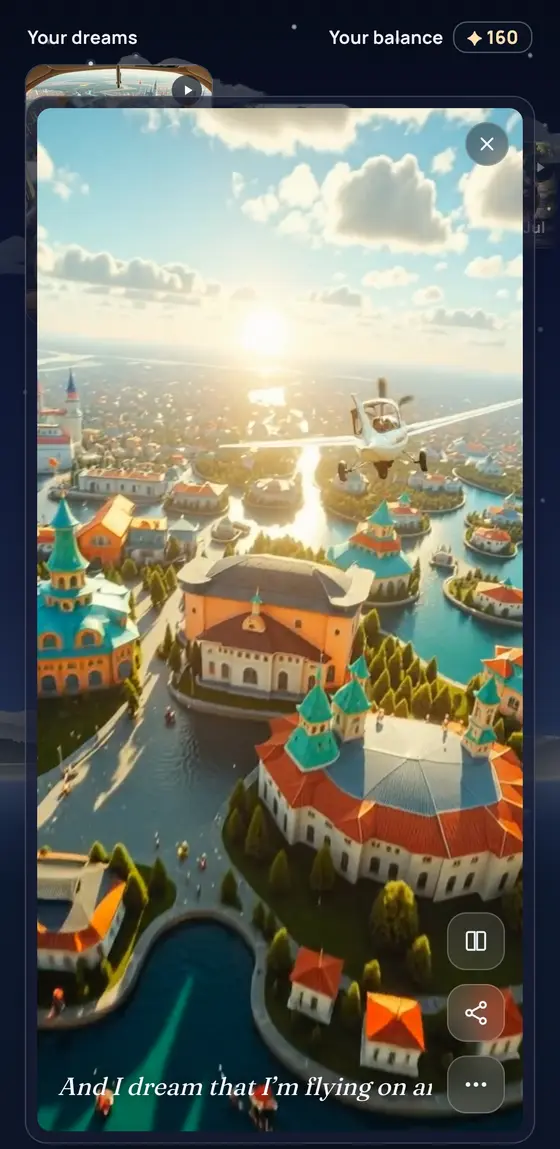 Store screenshotsZIP, 4 × JPG 1284×2778 - 4.0 MB Everything in one archiveZIP, 5.4 MB
 Boilerplate: DreamCrane is a voice-first AI dream journal. You say what you saw the moment you wake up, and the dream comes back as a painting, kept in a private journal with your own words. Made by SabaiDeep, a one-person studio.
Talk to us
One person reads this inbox, and answers the same day. Ask for numbers, a walkthrough, a build to test, or anything your form needs that is not on this page.
Out now on the App Store and Google Play.